
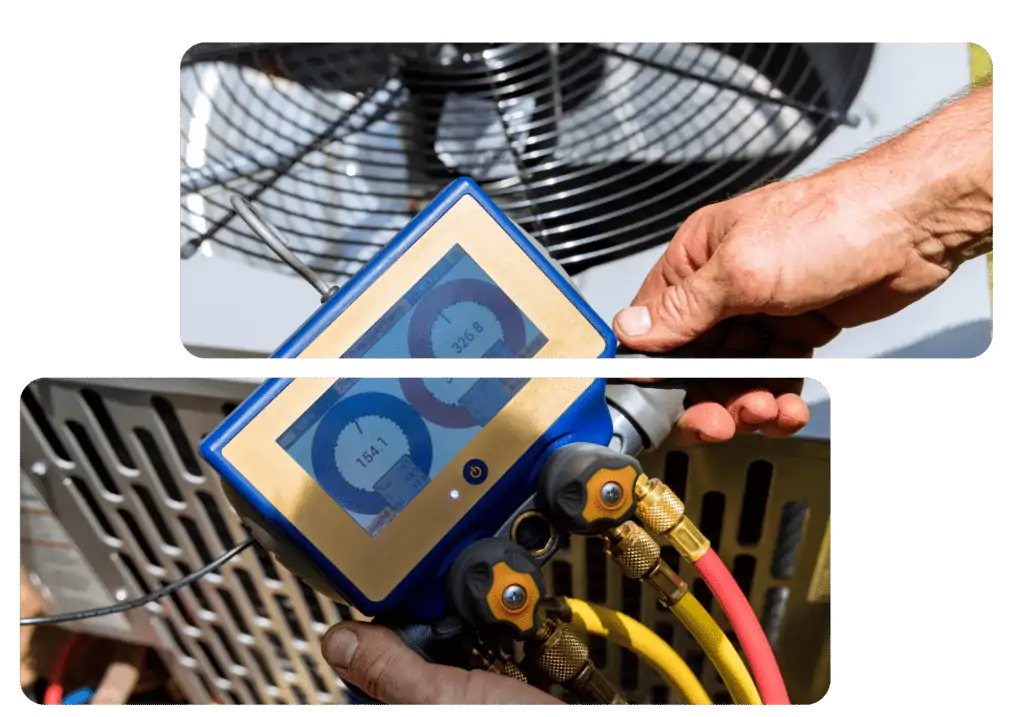
AC Tune-Up visits cover comprehensive inspection and service of your AC: cleaning coils and filters, lubricating moving parts, calibrating controls, testing electrical components for hazards, measuring refrigerant and checking for leaks, and ensuring proper airflow and condensate drainage. The result is improved efficiency, lower energy bills, and longer equipment life, while early fault detection prevents dangerous failures and costly breakdowns.
Key Takeaways:
- Thorough inspection and cleaning of coils, filters, drain lines, blower and condenser to restore airflow and efficiency.
- Mechanical, refrigerant and electrical checks – refrigerant charge and leak inspection, tighten/test connections, capacitors, contactors, belts and motors, plus thermostat calibration.
- Performance optimization and safety testing – measure airflow, temperature split and refrigerant pressures, verify safety controls, and provide a service report with recommendations.
Importance of Regular AC Tune-Ups
In Baton Rouge you face long, hot seasons that make your system run hard; scheduling a professional tune-up at least once a year-and ideally twice (spring and fall)-keeps small issues from becoming emergencies. Technicians catch things you miss, like low refrigerant or failing capacitors, which lowers the chance of unexpected breakdowns and can save hundreds in repair costs while keeping your home comfortably cool.
Enhancing Energy Efficiency
When a tech cleans coils, checks refrigerant charge, and seals obvious duct leaks, your system often runs 5-15% more efficiently, translating to noticeable savings on your electric bill. If your condenser coil is dirty or your air filter is clogged, the compressor works harder; addressing those with routine service reduces runtime and helps your thermostat reach setpoints faster.
Extending Lifetime of the Unit
Regular tune-ups spot wear like failing capacitors, worn fan motors, or minor refrigerant leaks before they escalate; that preventative care can extend a typical 10-15 year system by about 2-5 years. You avoid high-cost failures-especially compressor damage-by keeping moving parts lubricated and electrical connections tight.
Technicians replace inexpensive parts (filters, belts) and test components that commonly fail under heavy use, which prevents cascading damage. In one example, a $120 tune-up found a slow refrigerant leak that, when fixed, saved the homeowner from a $3,500 compressor replacement down the line-small interventions that preserve your investment and reduce downtime.
Common Components of a Professional AC Tune-Up
You’ll see technicians inspect filters, refrigerant, coils, fans, motors, capacitors, contactors, wiring, and the thermostat during a tune-up; typical service takes about 60-90 minutes. Technicians use gauges, multimeters, and coil cleaners to verify performance, and they log readings to compare against manufacturer specs so you can track trends and catch issues before a failure.
Checking Refrigerant Levels
Technicians hook up manifold gauges to measure suction and discharge pressures and compare them to the unit’s specified ranges, looking for signs of leaks or undercharge. Low refrigerant can reduce cooling capacity by up to 30% and cause ice on the evaporator; if a leak exists, techs will locate and repair it before recharging, and certified pros follow EPA handling rules.
Inspecting Electrical Components
You’ll have capacitors, contactors, relays, breakers, and wiring visually inspected and tested with a multimeter; techs look for loose connections, burnt insulation, and voltage drops. Because live voltage poses a serious hazard, they measure motor amperage against nameplate ratings and replace components that show abnormal readings or physical failure.
For more detail, a technician will check capacitor microfarad readings-expect within about ±6% of the rating-inspect contactor contacts for pitting, and verify control voltages are within manufacturer tolerances (often within ±5%). In high-humidity Baton Rouge, terminals often corrode, so techs clean, apply dielectric protection, and torque connections to the unit’s service specifications to prevent recurring faults.
Cleaning Coils and Fins
Technicians clean the evaporator and condenser coils with approved cleaners, clear debris from fins, and straighten bent fins with a fin comb to restore airflow. Dirty coils can cut efficiency by as much as 30%, raising head pressures and energy use, so keeping coils free of pollen and grime is a high-impact step in a tune-up.
More specifically, pros use low-pressure rinsing and foaming coil cleaners to break up oils and biological film without damaging aluminum fins, then gently comb fins straight to eliminate airflow restrictions. For heavily fouled condensers in outdoor Baton Rouge environments, they may recommend more frequent cleaning-often twice yearly-to prevent sustained efficiency losses.
Evaluating Thermostat Functionality
Technicians verify thermostat calibration, programming, and response by comparing the thermostat reading to a reference thermometer and testing control signals to the system; a properly calibrated thermostat should be within ±1°F. They also replace weak batteries and check Wi‑Fi or smart-thermostat connectivity so your setpoints and schedules work reliably.
In practice, a tech will force the system on (setpoint 5°F below ambient) to confirm the compressor and fans start promptly and to time cycle durations. Common issues include poor placement near heat sources causing short-cycling; when that happens they’ll recommend relocation or upgrading to a programmable/smart thermostat, which can cut your cooling costs by roughly 10-15%.
Signs Your AC Unit Needs a Tune-Up
If you notice more than one issue-noisy operation, uneven temperatures across rooms, rising energy costs, visible leaks, or a persistent musty smell-your system likely needs service. In Baton Rouge humidity, these symptoms often escalate fast; a clogged drain can cause water damage and a failing capacitor may lead to complete shutdown. Technicians typically find problems within a 30-60 minute inspection that a tune-up will address before costs climb.
Unusual Noises
When your unit emits grinding, squealing, hissing, or loud banging, you’re hearing specific failures: grinding usually signals bearing or motor failure, hissing suggests a refrigerant leak, and banging can mean a loose blower or debris in the fan. You should power the system off if noises include burning or loud metal impacts, then call a pro to diagnose motor, bearing, or refrigerant issues.
Inconsistent Cooling
If some rooms stay 3-5°F warmer than others or the thermostat reaches setpoint but the house still feels warm, airflow, refrigerant level, or compressor performance may be off. In Baton Rouge summers, this often shows as long run-times and poor humidity control; low refrigerant or a dirty coil are common culprits you’ll want checked.
Technicians measure the system’s temperature split and airflow to pinpoint the cause: a healthy evaporator typically produces a delta‑T of 15-20°F between return and supply. If readings fall outside that range, techs will test pressures, inspect for blockages, and evaluate the compressor and capacitors-fixes that restore even cooling and prevent short cycling, which shortens compressor life.
Increased Energy Bills
When your monthly bill climbs by 10-30% without increased use, efficiency has likely fallen. Dirty coils, clogged filters, and incorrect refrigerant charge force the system to run longer; for example, heavily soiled coils can reduce heat‑transfer efficiency by up to 30%, directly raising energy consumption.
During a tune-up, a technician will measure amperage, check refrigerant pressure, and compare observed performance to expected SEER benchmarks to locate inefficiencies. Addressing issues-cleaning coils, tightening electrical connections, and calibrating thermostats-often cuts energy use by roughly 10-15%, yielding fast payback on the service.
Frequency of AC Tune-Ups
Recommended Schedule
Most Baton Rouge HVAC pros recommend a biannual tune-up – typically in spring before heavy cooling and again in fall ahead of humidity spikes. If you run your AC more than six months a year, schedule service every six months; light-use homes can often manage with an annual check. Technicians will inspect filters, refrigerant, and electrical connections to keep efficiency high and failures low.
Factors Influencing Frequency
System age matters: units older than ten years often need more frequent attention. Heavy usage – running 8-12 hours daily – speeds wear, and pets, smoking, or nearby construction increase dust and coil fouling. Coastal salt air and large trees boost corrosion and debris buildup. You should watch for refrigerant loss, odd noises, or uneven cooling; those signs mean service intervals must shorten.
- AC tune-up – spring and fall scheduling
- Filter change – every 1-3 months for heavy use
- Refrigerant check – fixes leaks and restores cooling
- Coil cleaning – prevents efficiency loss
- Electrical inspection – avoids failures and hazards
Thou should act quickly when you notice reduced cooling, rising bills, or strange odors.
In practice, you may need service every 3-4 months if your system runs 12+ hours daily, you have multiple shedding pets, or you live within about 2 miles of the Mississippi where salt exposure speeds corrosion; commercial systems often follow monthly or quarterly schedules. Local techs typically recommend filter replacement every 30-90 days and full inspections every six months for high-use homes; upgrading to a programmable thermostat can reduce runtime and extend intervals.
- Usage hours – daily run time drives wear
- Pets & debris – increase filter and coil servicing
- Proximity to coast – raises corrosion risk
- System age – older units need closer attention
- Occupancy patterns – rentals or businesses need tighter schedules
Thou should plan tune-ups around these factors to maximize lifespan and avoid emergency repairs.
Choosing a Professional HVAC Technician
Focus on technicians who combine local experience with verifiable standards; check the full tune-up checklist at What’s Included in a Professional AC Tune-Up? Complete checklist to compare services. You should favor companies with NATE certification and EPA 608 certification, transparent pricing, and documented procedures. If a quote is unusually low, treat that as a warning-substandard work can cause system damage or higher energy bills.
Credentials and Experience
You should verify local licensing, manufacturer training, and at least 3-5 years of hands-on experience with systems like yours; NATE-certified techs and EPA 608 holders meet common industry standards. Also confirm they carry liability insurance and workers’ comp, and ask for recent job examples or service records to prove competency on same-brand units.
Customer Reviews and Recommendations
Scan Google, Yelp, and local community boards and aim for an average rating above 4.0/5 across 20+ reviews to reduce sampling bias. You should read both positive feedback and complaints to see how the company resolves issues, and prioritize firms that publish before-and-after photos, measured test results, and prompt responses to negative reviews.
Request recent references from Baton Rouge homeowners and ask about punctuality, whether the tune-up improved energy use, and if warranty claims were handled quickly; technicians who provide detailed invoices showing measured SEER, refrigerant charge, and motor amp draws demonstrate the documentation and follow-through you want.
Costs Associated with AC Tune-Ups
Professional tune-ups in Baton Rouge typically range from $80-$200 for standard service, with full diagnostic visits running $120-$250. You should budget extra for common repairs: capacitor replacement ($120-$250) or a refrigerant recharge ($150-$400). Technicians may add travel or emergency fees, and electrical hazards or refrigerant leaks increase costs and complexity. Perceiving local demand and system condition helps you estimate the final bill.
- AC tune-up
- Baton Rouge
- service fees
- repair costs
Average Pricing in Baton Rouge
A basic tune-up in Baton Rouge usually lands around $89-$129, while comprehensive checks average $130-$220. Peak summer demand can raise prices, and after-hours or weekend calls often add $50-$100. Older systems using R‑22 typically cost more because parts and refrigerant are pricier. Perceiving seasonal timing and service windows lets you save on scheduling.
- average pricing
- seasonal rates
- after-hours fees
Factors Affecting Cost
Age and model of your system, accessibility, and refrigerant type drive pricing; for instance, attic units require more labor and can double service time, and replacing a compressor can exceed $1,000. Warranty coverage or maintenance contracts often lower out‑of‑pocket expenses, while electrical issues and refrigerant leaks add disposal and repair fees. Perceiving these elements before booking prevents surprise charges.
- system age
- refrigerant type
- accessibility
- warranty status
Labor rates in Baton Rouge typically run $75-$125/hour, and homes with hard-to-reach equipment (attics, tight crawlspaces, second‑floor condensers) increase labor time; a 30-60 minute extra climb adds roughly $50-$100. You can often bundle a tune-up with minor repairs for a discounted flat rate, and choosing off‑peak months (spring, fall) lowers demand-based surcharges. Perceiving detailed quotes and itemized estimates saves you money and avoids unexpected line items.
- labor rates
- access difficulty
- bundled discounts
- itemized estimates
Summary
A professional AC tune-up in Baton Rouge is far more than a quick inspection. It is a comprehensive service designed to protect your system from the constant strain of heat and humidity. From cleaning coils and filters to checking refrigerant levels, electrical components, airflow, and safety controls, routine AC maintenance helps your system run efficiently, cool evenly, and avoid costly breakdowns during peak summer demand.
For Baton Rouge homeowners, regular AC tune-ups are one of the smartest investments you can make. Preventive air conditioning maintenance improves energy efficiency, lowers monthly cooling bills, and can extend the lifespan of your HVAC system by several years. Catching small issues early, such as weak capacitors, minor refrigerant leaks, or clogged drain lines, helps you avoid emergency AC repairs and premature system replacement.
If you are looking for reliable, professional AC tune-up service in Baton Rouge, ClimaServ Heating & Air Conditioning is ready to help. Our experienced local technicians perform thorough AC inspections and maintenance tailored to Louisiana’s climate, helping homeowners stay comfortable, efficient, and protected all year long. Schedule your AC tune-up with ClimaServ today and keep your cooling system running at its best when you need it most.
